
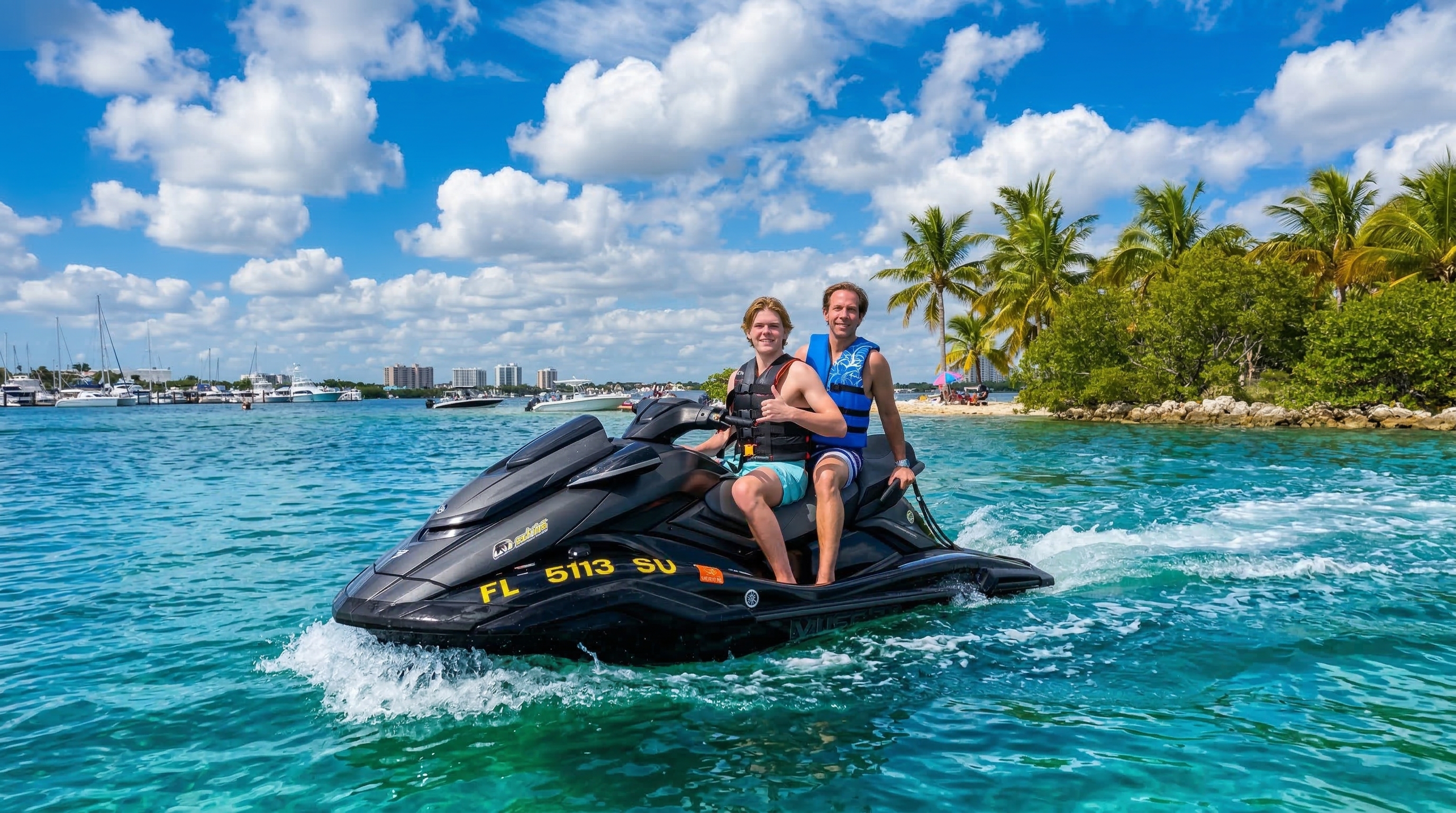
Miami Beach jet ski rentals: everything you need before you ride
What a Miami Beach jet ski rental actually costs in 2026
Prices across Miami Beach land somewhere between $100 and $200 per hour for a single-rider WaveRunner. Two-seater machines run a bit higher, usually $150 to $250 per hour. Some operators charge by the half hour, which sounds cheaper but often works out to more per minute.
Guided tours cost more than free rides because you're paying for a USCG-licensed captain to lead you. Expect $175 to $300 per person for a 60- to 90-minute guided route. That price usually includes a safety briefing, fuel, and life jackets.
We run Yamaha VX WaveRunners, and our rates include fuel, safety gear, and a pre-ride orientation. You can check our current rates and availability online to see what fits your schedule.
Where you'll actually ride
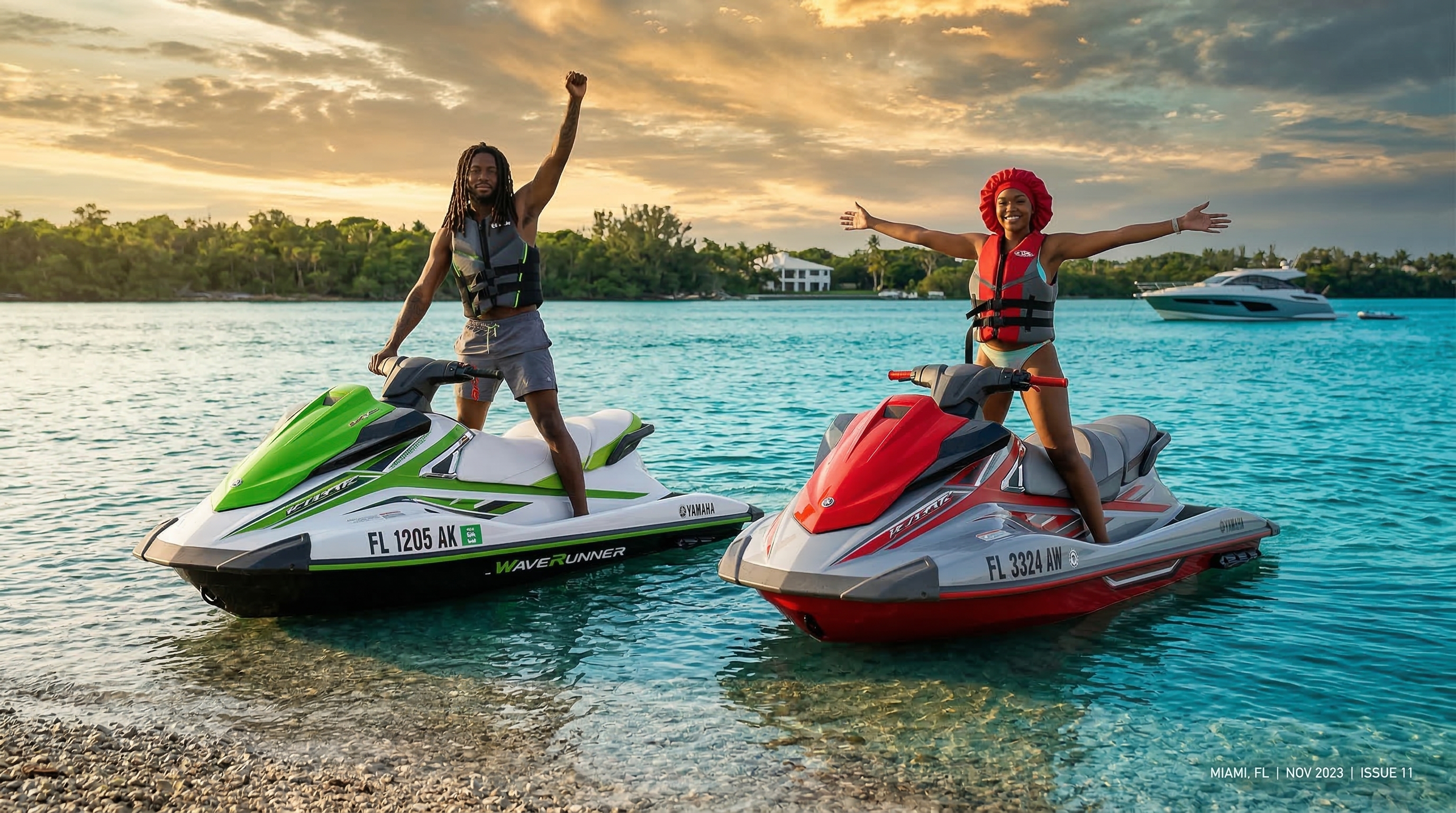
Almost nobody rides in the open Atlantic off Miami Beach. The surf is too rough for most personal watercraft, and the Coast Guard monitors that stretch closely. Instead, nearly every rental operator launches from the calmer Intracoastal Waterway or from marinas with direct access to Biscayne Bay.
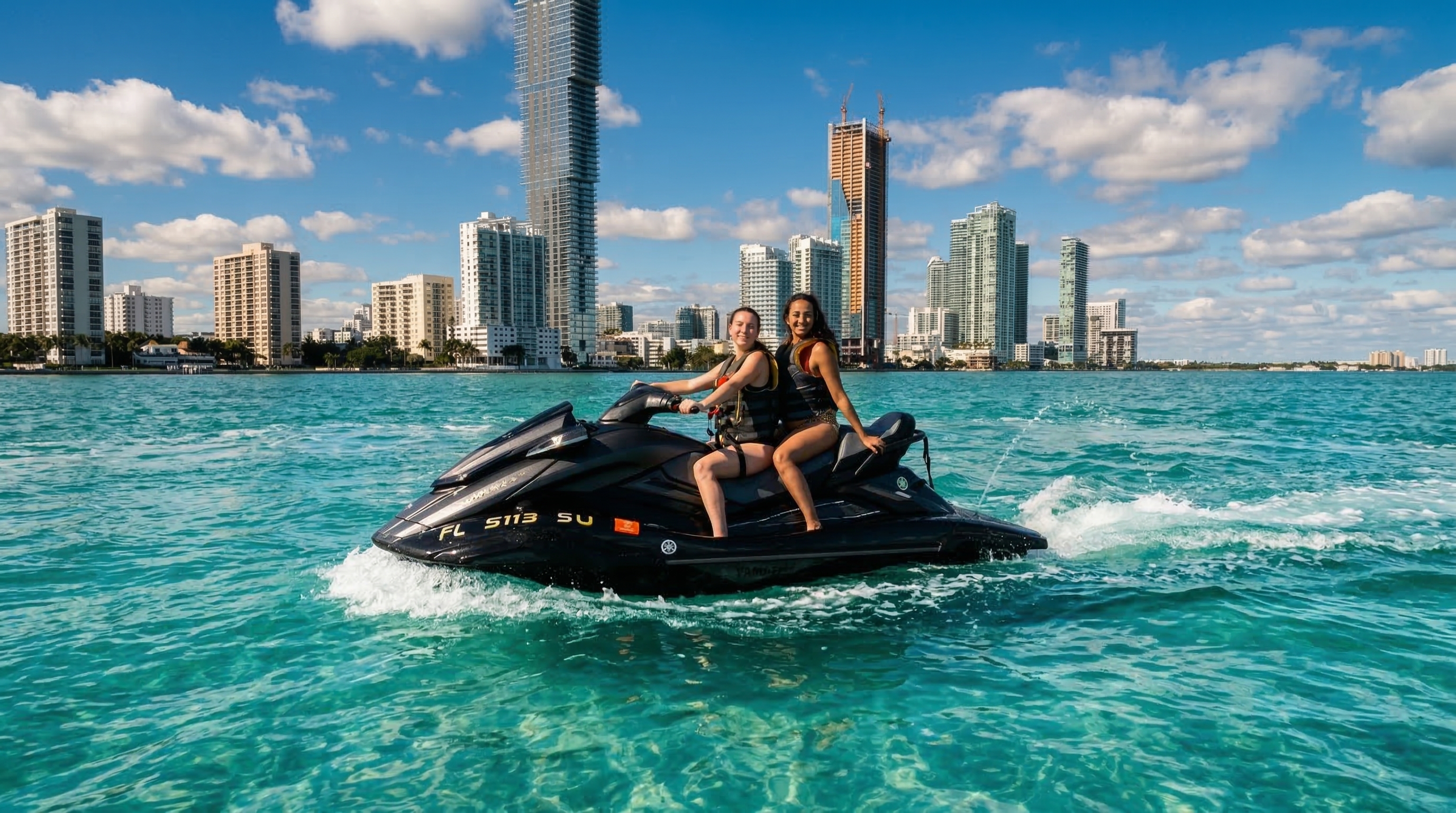
From the bay, you'll ride past some seriously recognizable landmarks. Star Island sits right there, about a mile south of the Venetian Islands, and you'll see the mansions from the water in a way you can't from the road. Fisher Island is just south of that, visible from Government Cut.
The bay is protected from open-ocean swells, so the water stays relatively flat on calm days. Mornings before 11 a.m. are the smoothest. By afternoon, wind chop picks up from the east and the ride gets bumpier. Not dangerous, just less comfortable if you're a first-timer.
Do you need a license to rent a jet ski in Florida?
If you were born before January 1, 1988, no. You can rent and operate a personal watercraft without any certification in Florida. That's per Florida Statute 327.395.
If you were born on or after that date, you need a Florida Boater Education ID card. You can get one by completing an approved boating safety course online. The course from the FWC-approved providers takes about four to six hours and costs around $30 to $50. You'll take it once, and the card is good for life.
Everyone, regardless of age, must be at least 18 to rent. Riders under 18 can operate as passengers or under direct supervision depending on the operator's policy. Florida law also requires that anyone born after 1988 who operates a vessel with 10 horsepower or more carry that boater education card on the water.
How to pick the right rental company
There are maybe a dozen jet ski rental outfits operating in and around Miami Beach. They're not all the same. Here's what actually matters when you're comparing them.
Fleet condition is the biggest one. Older machines break down more, run rougher, and spray more water into the footwell. Ask what year the WaveRunners or Sea-Doos are. Anything newer than three years old is in solid shape. We rotate our Yamaha VX fleet regularly and maintain them after every rental session.
Check whether fuel is included. Some places advertise a low hourly rate but charge separately for gas. A single ride can burn 10 to 15 gallons, so that add-on can cost $40 to $60 extra on top of the rental.
USCG licensing matters for guided tours. If a company offers narrated or guided rides, their captains should be licensed by the United States Coast Guard. This isn't optional; it's federal law for commercial vessel operations. We've had USCG-licensed captains leading our tours since we started in 2015.
Finally, read the cancellation policy before you book. Weather cancellations are common in South Florida, especially during summer when afternoon thunderstorms roll in almost daily from June through September. Good operators reschedule or refund. Some don't.
What to expect as a first-time rider
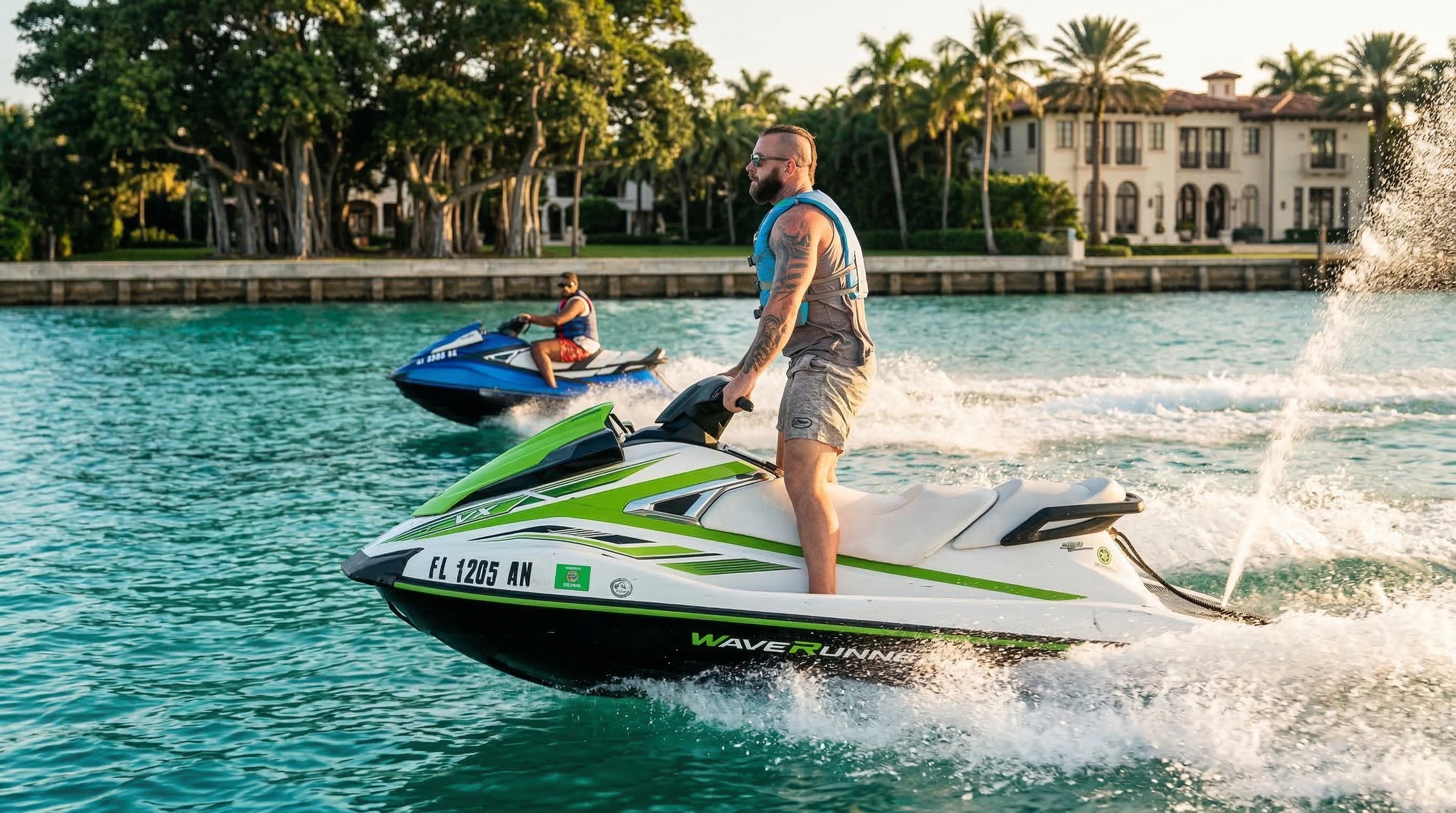
If you've never been on a personal watercraft before, you'll be fine. Really. These machines are built for recreational riders, not professional racers. The Yamaha VX, which is the model we and several other Miami Beach operators use, tops out around 50 mph but responds smoothly at lower speeds.
You'll start with a safety briefing at the dock. This covers throttle control, steering, how to reboard if you fall off (it happens, and it's not a big deal), and the boundaries of where you can ride. Most briefings last 10 to 15 minutes.
The first few minutes on the water feel wobbly. Your body hasn't adjusted to the motion yet, and you'll probably grip the handlebars too tight. After about five minutes, something clicks and you start to relax. By the ten-minute mark, most people are grinning and opening the throttle.
One thing nobody tells you: you will get wet. Even on a calm day, spray comes up from the hull at speed. Wear a swimsuit or quick-dry clothes. Leave your phone in a waterproof pouch or back at the dock. Sunglasses with a strap are a good idea. Sunscreen is non-negotiable since the reflection off the water doubles your UV exposure.
Best time of year to go
Miami Beach weather is rideable year-round, but the sweet spot is October through May. That's when humidity drops, rain is less frequent, and bay conditions stay calm more consistently.
Summer (June through September) brings afternoon thunderstorms almost every day. They usually hit between 2 p.m. and 5 p.m. and pass within an hour. If you book a morning ride during summer, you'll almost always dodge the rain. Water temperatures in summer hover around 85 to 87 degrees Fahrenheit, so falling in is actually refreshing.
Winter months (December through February) are the busiest tourist season. Prices don't always go up, but availability tightens. Book at least two to three days ahead if you're visiting during Art Basel week, Spring Break, or any holiday weekend.
Weekday mornings are the least crowded times on the water. Fewer boats, less wake, and more space to open up the throttle. If your schedule allows it, a Tuesday or Wednesday morning ride is the best experience you'll get.
Safety rules on the water in Miami Beach
Florida has specific laws for personal watercraft, and the Florida Fish and Wildlife Conservation Commission (FWC) enforces them. Here's what you need to follow.
You can't operate a jet ski between sunset and sunrise. It's illegal in Florida. Period.
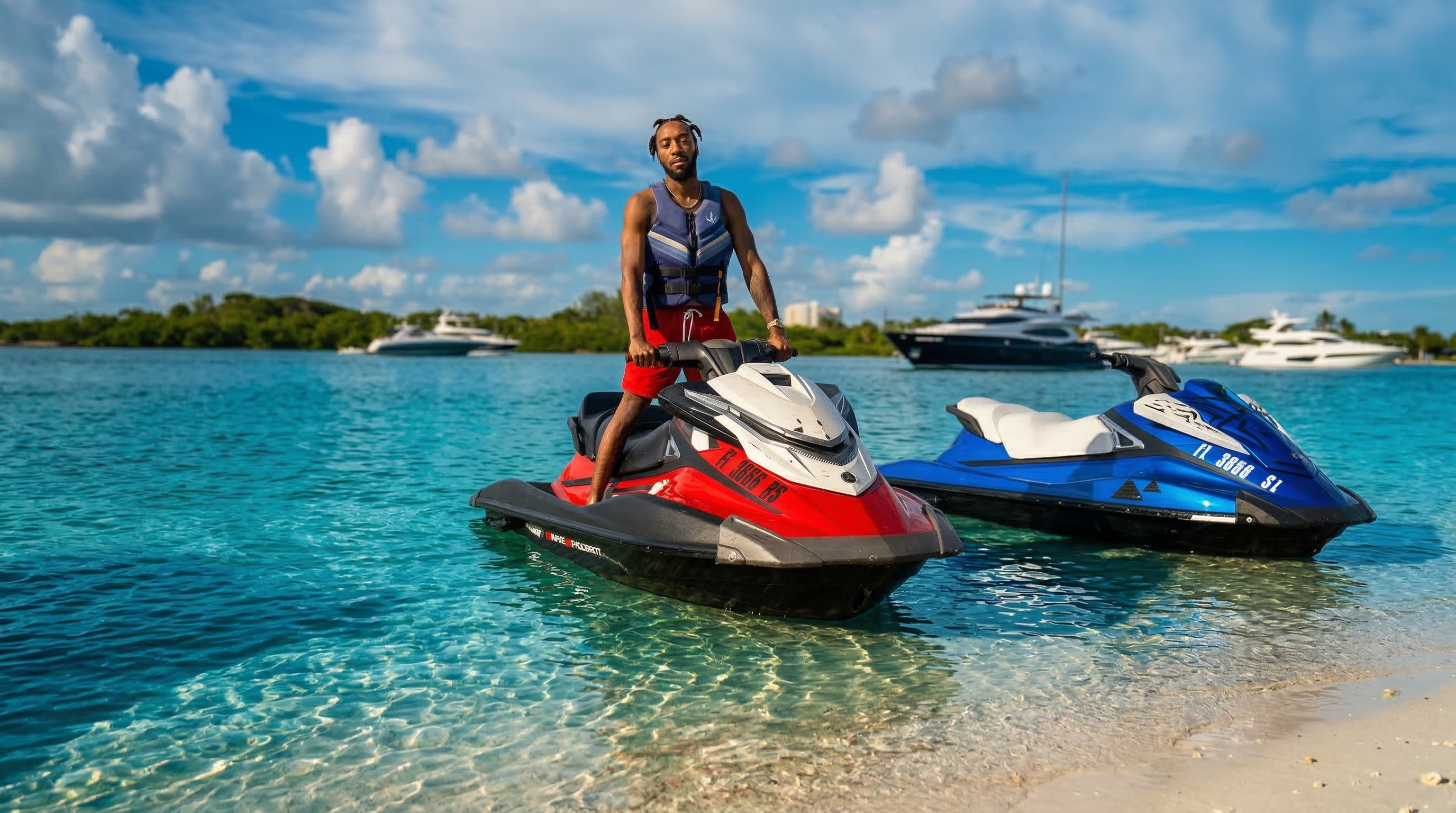
Everyone on the watercraft must wear a USCG-approved life jacket. Not just have one on board; actually wear it.
The lanyard (engine cut-off switch) must be attached to your wrist or life jacket at all times. If you fall off, the engine shuts down.
Idle speed zones exist throughout the Intracoastal and near marinas. That means under 5 mph. Violating idle speed zones results in fines starting at $50 and going up from there.
Stay at least 300 feet away from any vessel displaying a diver-down flag (red with a white diagonal stripe).
Officers from FWC patrol Biscayne Bay regularly, especially on weekends. They will stop you, check for your boater education card if applicable, and confirm you have proper safety equipment. We go over all of this in our pre-ride briefing so you're not caught off guard.
You can see some of the spots we cover on our routes over on our photo gallery.
What to bring and what to leave behind
Bring sunscreen (reef-safe if possible, since you're on the bay), a towel, sunglasses with a retainer strap, and water-friendly shoes. Flip-flops work but can slip off at speed. Water shoes with rubber soles grip the footwell better.
Leave valuables in your car or hotel. Most operators have a small lockbox or dry storage at the dock, but space is limited. Don't bring anything you'd be upset to lose to the bottom of Biscayne Bay.
A waterproof phone pouch rated IPX8 is worth the $10 if you want photos. Just know that operating a phone while driving the watercraft is a distraction and most operators ask you to pull it out only when stopped.
Getting to the dock
Most Miami Beach jet ski operations are along the Intracoastal side of the island, not the ocean side. If you're staying on South Beach, that means heading west toward the bay. It's a short Uber or Lyft ride, usually under $10 from most hotels on Collins Avenue or Ocean Drive.
Parking varies by location. Some marinas have paid lots ($5 to $15 per hour). Street parking in Miami Beach is metered and enforced seven days a week. The ParkMobile app works at most meters and saves you from hunting for quarters.
Plan to arrive 15 to 20 minutes before your scheduled time. You'll need to sign a waiver, show ID, and sit through the safety briefing before getting on the water. If you show up late, your ride time usually doesn't get extended.
A few things most rental websites won't tell you
The water is shallow in some parts of Biscayne Bay. We're talking two to four feet in certain flats. Running aground on a sandbar is embarrassing but it happens, especially near the Venetian Causeway. Your safety briefing should cover which areas to avoid.
Wind direction changes the ride quality dramatically. An east wind over 15 mph makes the bay choppy and the ride a lot more physical. NOAA's marine forecast for Biscayne Bay is worth checking the night before. If small craft advisories are posted, most operators will cancel or reschedule.
You'll be sore the next day if you ride for more than 30 minutes. Jet skiing uses your legs, core, and grip muscles in ways you don't normally use them. It's a real workout disguised as fun.
And one more thing: tipping your guide is customary if you take a guided tour. 15 to 20 percent is standard, same as a fishing charter or boat captain. Guides work in the sun all day and their pay often depends on tips.
If you want to learn more about us and how we operate, head over to our about page.
Sources
| Factor | Guided tour | Free ride |
|---|---|---|
| Price range (per hour) | $175 - $300 | $100 - $200 |
| Route | Set route past landmarks | Ride within designated area |
| Narration / local info | Yes, from a USCG-licensed captain | No |
| Best for | First-timers, sightseeing, groups | Experienced riders who want freedom |
| Speed | Moderate (group pace) | Your choice within limits |
Frequently Asked Questions
How much does it cost to rent a jet ski in Miami Beach?
Most Miami Beach jet ski rentals cost between $100 and $200 per hour for a single rider, or $150 to $250 for a two-seater. Guided tours run $175 to $300 per person for 60 to 90 minutes, including fuel and safety gear.
Do you need a boating license to jet ski in Miami Beach?
If you were born before January 1, 1988, no license or card is required. Anyone born on or after that date needs a Florida Boater Education ID card, which you can earn by completing an online course approved by the FWC. The card is good for life.
What is the age requirement to rent a jet ski in Florida?
You must be at least 18 years old to rent a jet ski in Florida. Riders under 18 can ride as passengers on a two-seater with an adult operator. Some rental companies set their own minimum age at 21, so check the specific operator's policy.
Where do you ride jet skis in Miami Beach?
Almost all jet ski rentals in Miami Beach launch from the Intracoastal Waterway or Biscayne Bay, not the Atlantic Ocean side. You'll ride past Star Island, Fisher Island, and the Venetian Islands with the Miami skyline in view.
Is jet skiing in Miami Beach safe for beginners?
Yes. Modern WaveRunners are stable and designed for recreational riders. Every reputable operator gives a 10- to 15-minute safety briefing before you ride, covering throttle control, steering, and reboarding. Most beginners feel comfortable after about five minutes on the water.
What is the best time of day to rent a jet ski in Miami Beach?
Morning rides before 11 a.m. are the best. The bay is calmer, there's less boat traffic, and you avoid the afternoon thunderstorms that are common from June through September. Weekday mornings are the least crowded.
Comments (0)