
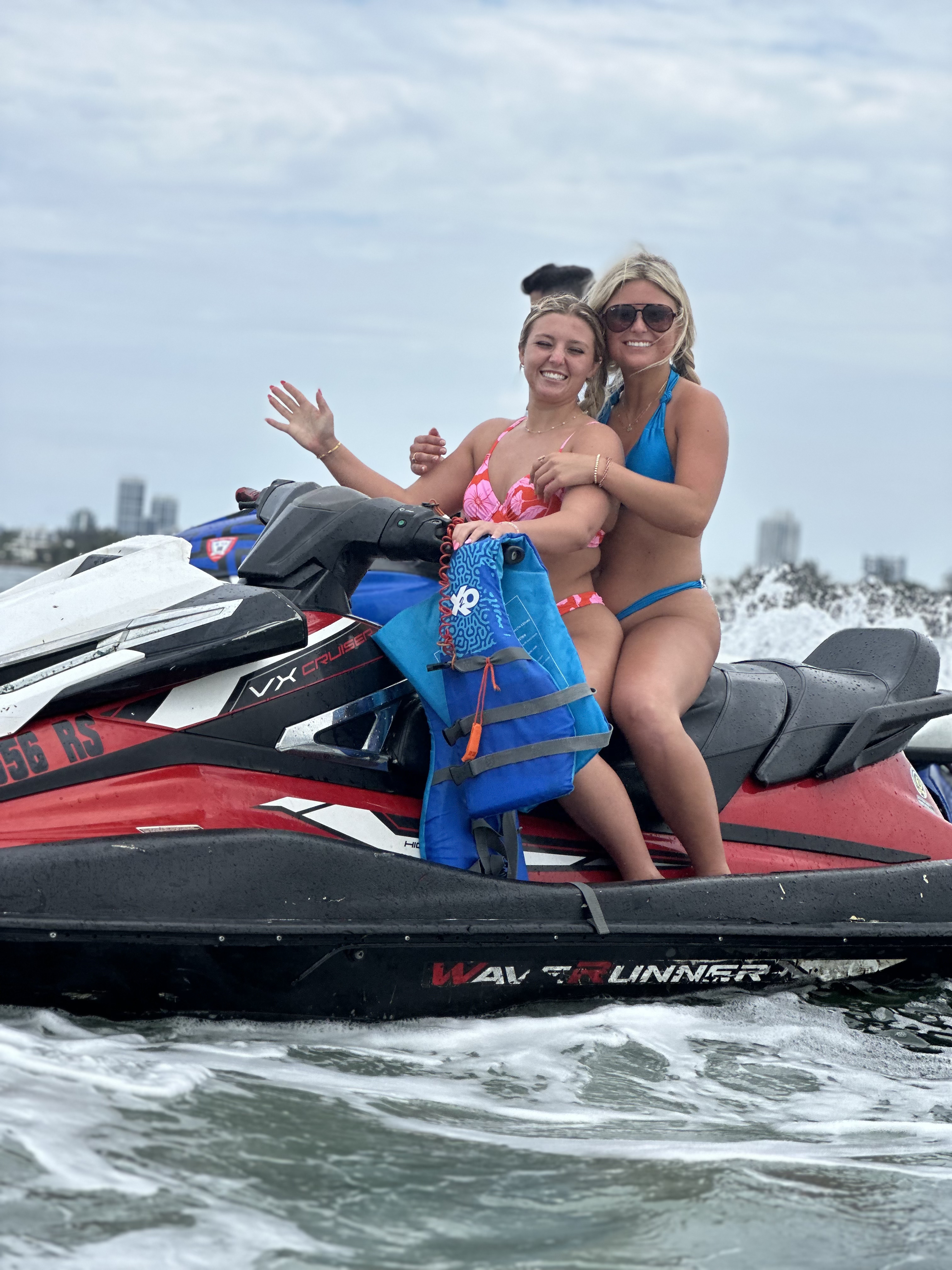
Wave runner rentals in Miami: prices, spots, and what to know first
What wave runner rentals in Miami actually cost
Pricing across Miami varies more than you'd expect. Some operators charge per machine, others per person. Some bundle fuel into the price, others tack on a fuel surcharge at the end. Here's a realistic breakdown for 2026.
Single-rider rentals on a standard Yamaha VX WaveRunner run about $125 to $150 per hour. Double-rider machines cost a bit more, usually $150 to $200 per hour. Guided tours that last 60 to 90 minutes land in the $175 to $250 range per person, but the guide, fuel, and safety gear are all included. Half-day and full-day rates exist at some spots, though most operators on the bay stick to hourly blocks.
The biggest hidden cost? Damage waivers. A lot of places charge a $50 to $100 non-refundable damage fee on top of your rental. Ask about this before you swipe your card. At our dock, the damage waiver is built into the rate so there are no surprises.
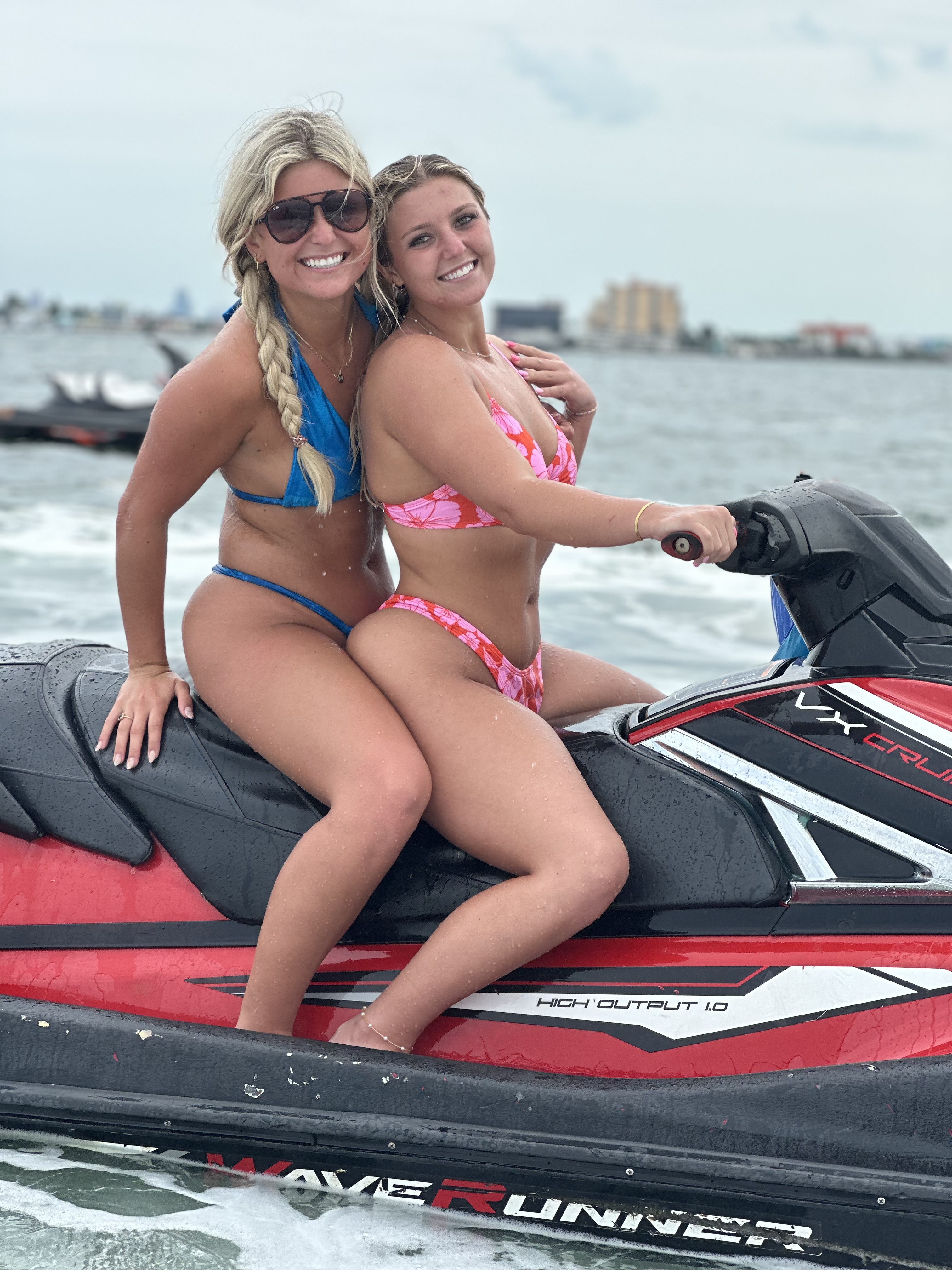
Where to ride in Miami
Miami has two main riding zones that most rental operators work from: Biscayne Bay and the Intracoastal Waterway. They feel completely different on the water.
Biscayne Bay is the big draw. It's wide, relatively shallow in spots, and gives you open sightlines toward the downtown skyline, Star Island, and Fisher Island. Morning rides are the best here. The water is glassy before noon, and the light hitting those waterfront mansions is something else entirely. By mid-afternoon the wind picks up and chop makes things bouncier, which is fun if you want it, but less relaxing.
The Intracoastal Waterway runs parallel to the coast and is narrower, with no-wake zones near docks and residential areas. Guided tours often use the Intracoastal to pass by the Venetian Islands and celebrity homes along the corridor. Speed is limited in sections, so this is more of a cruising route than a full-throttle run.
Some tours combine both, starting in the Intracoastal and then opening up into the bay. That's the route we take with most of our guided groups at Funwaves, and honestly it's the best way to see both sides of the water without feeling rushed.
Guided tours vs. free rides
This decision comes down to one thing: how comfortable are you on the water?
If you've ridden before and know how to handle a WaveRunner, a free ride gives you more flexibility. You set your own pace, pick your route, and don't have to stay in a group. Most operators set GPS boundaries on the machine or give you a mapped zone to stay within. Stray outside it and they'll radio you back.
Guided tours work better for first-timers, families, and anyone who wants a local perspective. A USCG-licensed captain leads the group, keeps everyone at a safe distance from boat traffic, and points out landmarks along the way. You still get to ride your own machine. You're just following a leader instead of figuring it out solo.
FeatureGuided tourFree rideTypical price per hour$175 - $250$125 - $175Route flexibilitySet by guideOpen within GPS zoneSafety briefingIncludedIncludedBest forFirst-timers, groups, sightseeingExperienced ridersFuel includedUsually yesVaries by operatorDuration options60-90 min typical30 min, 1 hr, 2 hr blocks
We offer both options. If you're not sure which one fits, take a look at our rental options and the descriptions will make it clear.
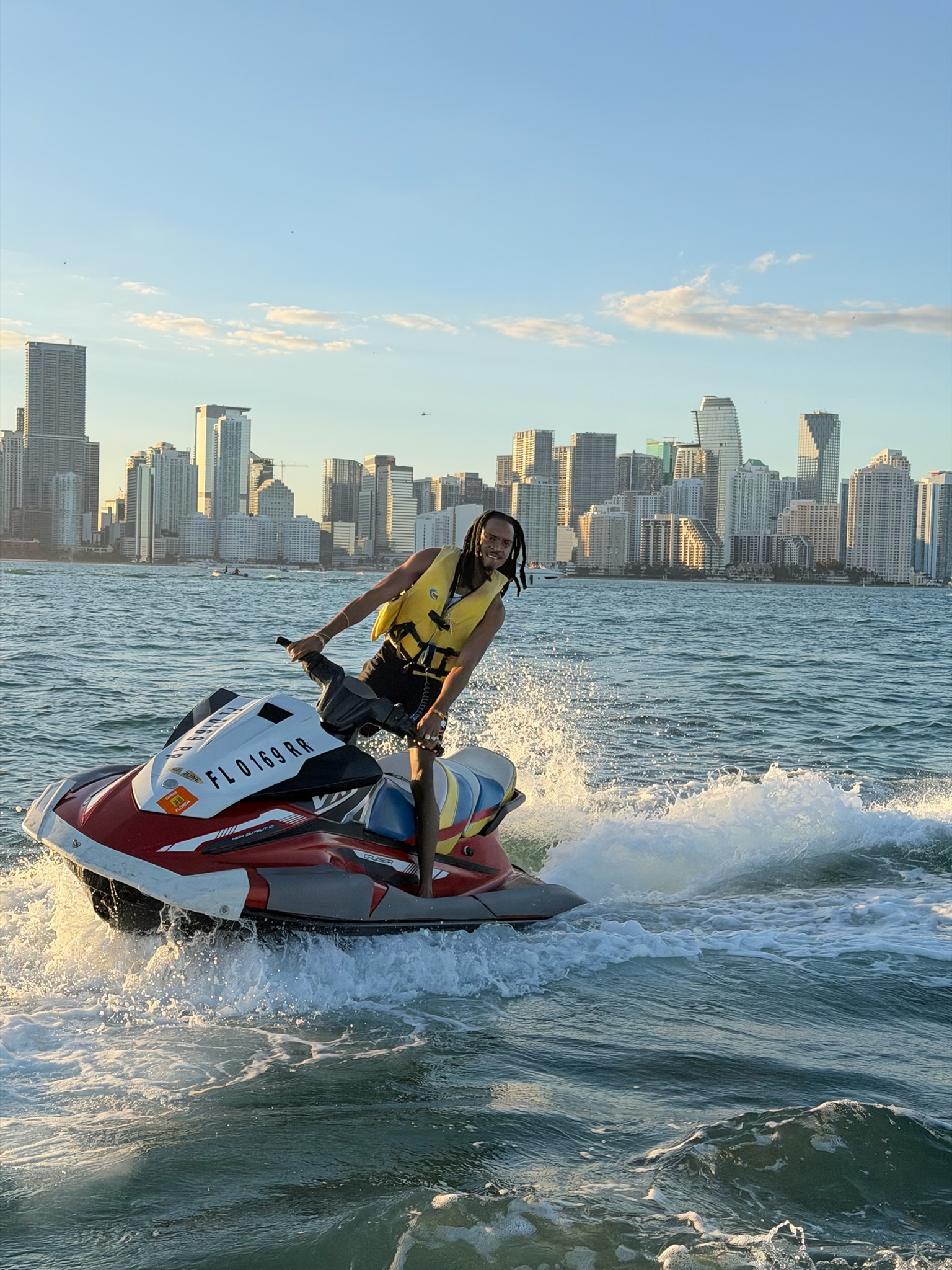
Do you need a license to rent a wave runner in Florida?
No. Florida does not require a boating license to rent a personal watercraft. But there's a catch.
Under Florida Statute 327.395, anyone born on or after January 1, 1988 must have a valid Boater Safety ID Card issued by the Florida Fish and Wildlife Conservation Commission (FWC). You can get this by completing a state-approved boater safety course. Several online options exist, and most take about four to six hours. The FWC accepts courses from providers like Boat-Ed and the BoatUS Foundation.
If you're a tourist from out of state, Florida also accepts a temporary certificate that some rental operators can help you obtain on-site. Not all of them do this, so call ahead.
Riders must be at least 18 years old to rent. Passengers can be younger, but operators set their own minimum age (usually 4 to 6 years old, with a life jacket required for all minors).
What to expect on your first ride
If you've never been on a WaveRunner, the first 30 seconds feel weird. The throttle is on the right handlebar and the machine doesn't steer like a bike or a car. You need to be giving it some throttle to turn. At idle speed, the handlebars do almost nothing.
Every reputable operator will walk you through the basics on the dock before you leave. At Funwaves, our briefing covers throttle control, turning, emergency shutoff (there's a lanyard clipped to your wrist), right-of-way rules, and how to reboard if you fall off. Yes, you'll probably fall off at least once. It happens. The life jacket keeps you floating and the machine idles itself down when you let go of the lanyard.
Expect to get soaked. Even on a calm day, spray comes up over the front at speed. Wear swimwear or clothes you don't mind getting salty. Leave your phone in a waterproof pouch or back on shore. Sunglasses with a strap are a good idea. Sunscreen too, but apply it 20 minutes before you ride so it doesn't wash off immediately.
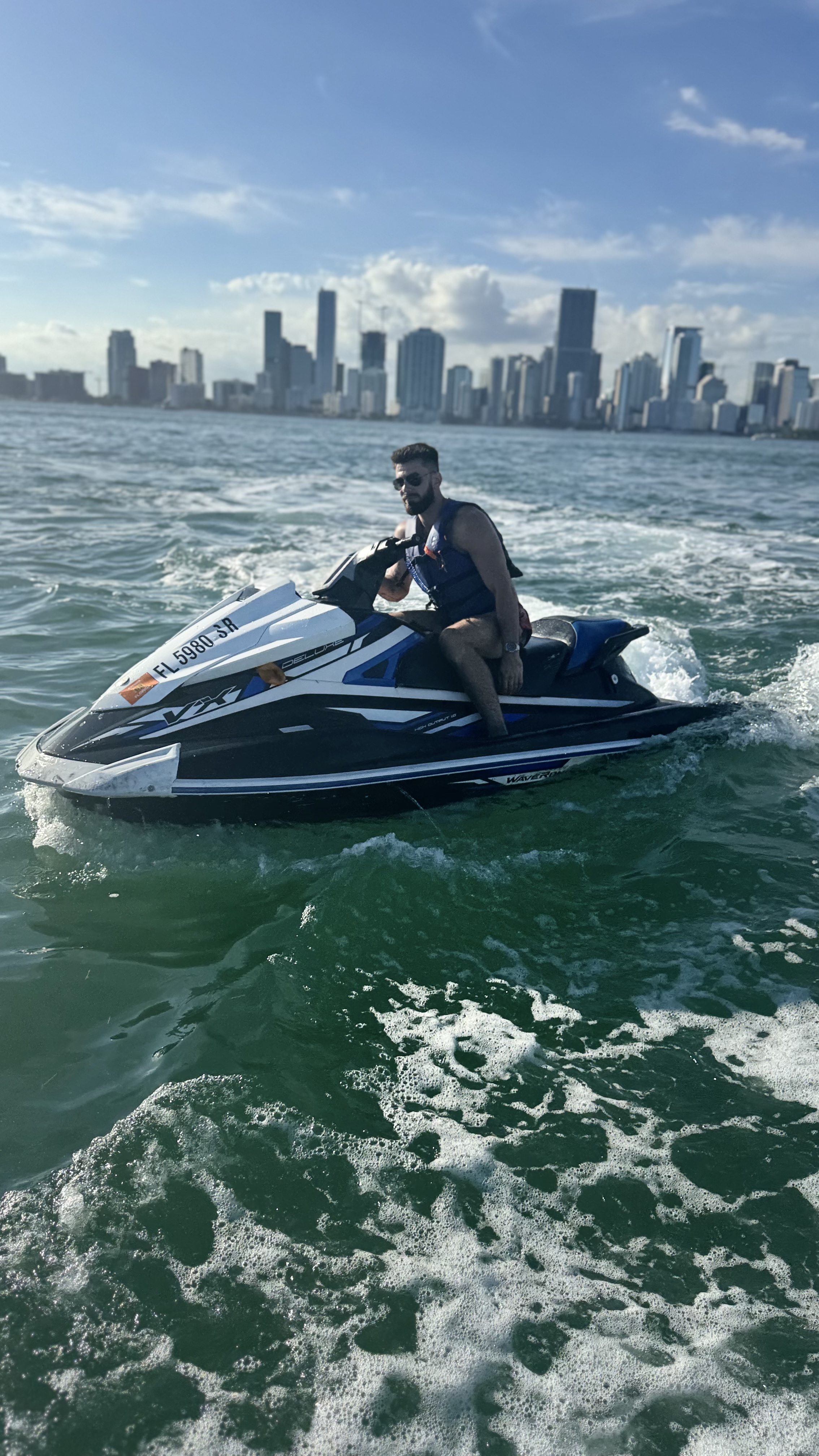
Best time of year to rent a wave runner in Miami
You can ride year-round here. That's one of the real advantages of Miami. Water temps stay above 70 degrees Fahrenheit from roughly March through November, and even in January they rarely dip below the mid-60s.
Peak season runs from November through April. That's when tourist traffic is highest, so expect busier waterways, higher prices, and longer wait times at popular docks. Booking at least a few days ahead during peak season is a good move.
Summer months (June through September) are quieter on the tourist side but come with afternoon thunderstorms. Almost every day from June onward, you'll see clouds stacking up around 2 or 3 PM. Morning rides are the play during summer. The water is warmest, the crowds are thinnest, and you'll be off the bay before the weather rolls in.
October and early November are honestly the sweet spot. Warm water, fewer crowds, and hurricane season is winding down. If you have flexibility on dates, that window is hard to beat.
How to pick the right rental operator
There are dozens of outfits renting personal watercraft across Miami-Dade County. Quality ranges from excellent to sketchy. Here's what to look for.
First, check that the operator is licensed through the USCG and the State of Florida. Ask if their guides hold USCG captain's licenses. This matters because it means they've passed federal exams on navigation rules, safety procedures, and emergency response. An unlicensed guide running a tour is a red flag.
Second, look at the fleet. Well-maintained Yamaha WaveRunners or Kawasaki Jet Skis from the last few model years are the standard you want. If the machines look beat up, have cracked hulls, or the operator can't tell you the model year, walk away.
Third, read recent reviews. Not just the star rating, but the actual words. Look for mentions of how the briefing went, how the machines performed, and whether the staff was helpful when something went wrong. A 4.5-star average with 300 reviews means more than a 5-star average with 12.
We've been running rentals on the water here since 2015, and our fleet is Yamaha VX series WaveRunners maintained on a strict schedule. You can read more about our team and credentials if that matters to you (and it should).
What to bring and what to leave behind
Bring sunscreen (reef-safe if possible, since you're on Biscayne Bay), a towel for afterward, and a waterproof phone pouch if you want photos. Most operators provide life jackets, but bring water shoes if you have them. The dock surfaces can be rough on bare feet.
Leave behind anything you can't afford to lose. No expensive jewelry, no unsecured sunglasses, no wallets in your pocket. Most docks have a small storage area or lockers, but the safest move is to keep valuables locked in your car.
One thing people forget: a hair tie. If you have long hair and you're hitting 40 mph across the bay, you'll want it pulled back. Trust us on this one.
Cancellation and weather policies
Weather cancellations are part of life when you're booking anything on the water in South Florida. Most operators will reschedule for free if conditions are unsafe (lightning, heavy storms, small craft advisories). But policies on customer-initiated cancellations vary a lot.
Some places require 24-hour notice for a full refund. Others are stricter and hold a percentage regardless. At Funwaves, we give full refunds for weather cancellations and work with you on rescheduling if your plans change. Just give us as much notice as you can.
Check the operator's cancellation terms before you book. This is especially true if you're booking through a third-party site like Viator or GetYourGuide, which may have their own policies layered on top of the operator's.
Booking your ride
If you're in Miami Beach and want to get on the water without the hassle of comparing a dozen operators, check our rental and tour options here. We run daily from our dock on the Intracoastal, and you can book online or call us the morning of if we have availability. Morning slots go first, especially on weekends, so booking a day or two ahead saves you from showing up to a full schedule.
Sources
| Feature | Guided tour | Free ride |
|---|---|---|
| Typical price per hour | $175 - $250 | $125 - $175 |
| Route flexibility | Set by guide | Open within GPS zone |
| Safety briefing | Included | Included |
| Best for | First-timers, groups, sightseeing | Experienced riders |
| Fuel included | Usually yes | Varies by operator |
| Duration options | 60-90 min typical | 30 min, 1 hr, 2 hr blocks |
Frequently Asked Questions
How much does it cost to rent a wave runner in Miami?
Most operators charge between $125 and $200 per hour for a WaveRunner rental in Miami. Guided tours tend to be higher, around $175 to $250, but fuel and gear are usually included. Always ask about damage waiver fees before booking since some places add $50 to $100 on top of the listed rate.
Do you need a boating license to ride a jet ski in Florida?
No boating license is required. However, Florida law requires anyone born on or after January 1, 1988 to carry a Boater Safety ID Card from the FWC. You can earn one by completing an approved online course that takes about four to six hours.
Where is the best place to jet ski in Miami?
Biscayne Bay is the most popular riding area. It offers open water, skyline views, and relatively calm conditions in the morning. The Intracoastal Waterway is another solid option, especially for guided tours that pass by Star Island, Fisher Island, and the Venetian Islands.
How old do you have to be to rent a wave runner in Miami?
You must be at least 18 years old to rent a personal watercraft in Florida. Passengers can be younger, typically 4 to 6 years old depending on the operator, and all minors are required to wear a life jacket.
What is the best time of day to go jet skiing in Miami?
Morning rides between 9 AM and noon are the best. The water on Biscayne Bay is calmest before the afternoon wind picks up. In summer, morning rides also help you avoid the daily thunderstorms that typically form around 2 to 3 PM.
Can you fall off a wave runner?
Yes, and it's pretty common for beginners. You'll wear a life jacket and a safety lanyard attached to your wrist. If you fall off, the lanyard pulls free and the engine cuts out. The machine idles nearby and you swim back to it and reboard. It's not dangerous, just wet.
Comments (0)